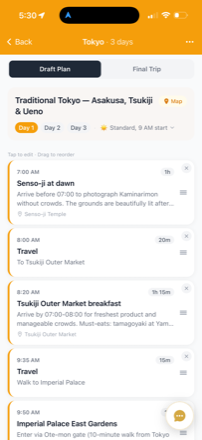
Get this guide as a tappable itinerary — freeDay-by-day plan, audio tours, one-tap Google Maps
Plan My Trip3.6 million people pass through here daily
Postwar yakitori alleys, 200 tiny bars, the best free viewpoint in Tokyo, and a station with 200+ exits.
Powered by ITINE
Day-by-day plan, audio tours, and one-tap Google Maps — completely free.
Destinations
Your Itinerary
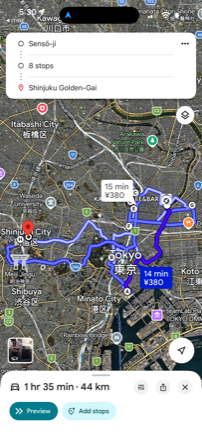
Google Maps
A narrow postwar yakitori alley packed with tiny stalls seating 6–8 people. Smoke, sizzling meat, cold beer, and atmosphere that hasn’t changed in decades. This is old Tokyo at its most authentic — cramped, smoky, and wonderful.
A grid of 200+ tiny bars crammed into 6 narrow alleys, each seating 5–8 people. Every bar has a different theme, vibe, and owner. Some are members-only, but most welcome tourists — look for signs. The density of personality per square meter is unmatched anywhere in the world.
Free observation decks on the 45th floor (202 meters). North tower is more popular; south tower has almost identical views with a fraction of the queue. On clear days you can see Mt. Fuji. 360-degree panoramic views of the entire city.
Tokyo’s biggest entertainment district. Neon overload, the Godzilla head on the Toho building, Kabukicho Tower (calmer restaurants on upper floors), and Robot Restaurant (if still operating — check current status). Walk it at night for the full sensory experience.
One of Tokyo’s finest gardens, spanning three distinct styles: Japanese traditional, English landscape, and French formal. Cherry blossom season here is extraordinary, but it’s beautiful year-round. A perfect counterpoint to the chaos outside.
A small Shinto shrine hidden among the skyscrapers of east Shinjuku. A peaceful contrast to the surrounding chaos. The vermillion torii gates glow at night. A flea market/food market happens on some Sundays.
Japan’s most prestigious department store. Even if you’re not buying, the basement food hall (depachika) is a destination — beautifully packaged sweets, wagashi, bento, and free samples. The menswear building across the street is equally impressive.
The rich fish-and-pork-bone tsukemen — thick noodles you dip into an intensely concentrated broth. Arguably the best tsukemen in Tokyo.
¥1,000–1,200
The tempura course (tendon or set) — perfectly battered shrimp, vegetables, and fish fried to a shatter. Operating since 1923.
¥2,000–3,500
The lunch-only iwashi (sardine) set — Michelin-starred dinner restaurant that serves an ¥800 sardine lunch. Possibly the best-value Michelin meal in all of Tokyo.
¥800–1,000
Draft beer and a hot dog. A retro standing beer hall inside Shinjuku Station that’s been a local institution for decades. Fast, cheap, and full of character.
¥500–1,000
Whatever the board says is today’s special. Conveyor belt sushi bar with fish so fresh the prices feel like a mistake. Fast turnover, no reservations.
¥150–500 per piece
Whatever the bartender recommends. Each bar is different. Some serve food, some don’t. Highball (whisky soda) is the universal safe order.
¥1,000–3,000 per bar
— (you’re here)
JR Chuo Line (Rapid) · 15 min, or Marunouchi Line · 20 min
JR Yamanote Line · 7 min
200+ exits. Screenshot your exit BEFORE going underground. East Exit = Kabukicho and Golden Gai. West Exit = Memory Lane and Government Building. South Exit = Shinjuku Gyoen direction. Shinjuku is the world’s busiest station — Google Maps indoor navigation is your friend.
Late afternoon for Shinjuku Gyoen (if not Monday), sunset at the Government Building (free), then dinner at Omoide Yokocho, night in Golden Gai
Cherry blossom season (late March–April) for Shinjuku Gyoen, or year-round for nightlife — Golden Gai and Memory Lane don’t have seasons
Morning rush (7:30–9:30 AM) — the station will crush your soul. Shinjuku Gyoen is closed Mondays.
3–5 hours — 90 min for Shinjuku Gyoen, 30–45 min for the Government Building, 60–90 min for Memory Lane dinner, 60–120 min for Golden Gai. Shinjuku has the most to do of any neighborhood — it can fill an entire evening.
ELECTRIC PULSE — includes Shinjuku