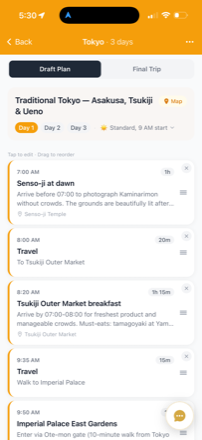
Get this guide as a tappable itinerary — freeDay-by-day plan, audio tours, one-tap Google Maps
Plan My TripMuseums and manga, one stop apart
World-class art museums in the morning, multi-floor anime arcades in the afternoon — connected by a 4-minute train ride.
Powered by ITINE
Day-by-day plan, audio tours, and one-tap Google Maps — completely free.
Destinations
Your Itinerary
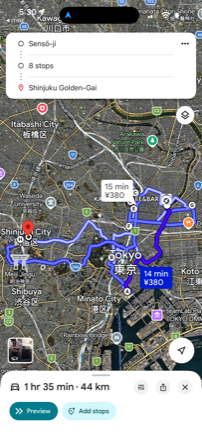
Google Maps
Japan’s largest and most comprehensive museum, covering Japanese art from ancient Jomon pottery to Edo-period screens to modern prints. The Honkan (main building) alone takes 2 hours. The Gallery of Horyuji Treasures is a stunning minimal space housing 7th-century Buddhist art.
8 floors of manga, anime figures, doujinshi (fan comics), vintage toys, cosplay supplies, and collectibles. This is the collector’s mecca — each floor specializes in a different category. Prices are fair and the condition grading is meticulous.
A sprawling public park that houses 6+ museums, a zoo, shrines, and the beautiful lotus-covered Shinobazu Pond. Cherry blossom season here is legendary — the park becomes a tunnel of pink. Year-round, it’s a lovely green space for a stroll between museums.
A retro gaming store across 3 floors, packed with playable consoles from every era — NES, SNES, Sega Saturn, N64, and more. The top floor is a retro arcade with vintage cabinets you can actually play. Gaming nostalgia heaven.
A covered street market running between Ueno and Okachimachi stations. Originally a postwar black market, now a chaotic mix of fresh fish, dried goods, street food, discount clothing, sneakers, and cosmetics. The energy is incredible — vendors shout prices, tourists haggle, and the food is cheap and good.
A Le Corbusier-designed UNESCO building housing an impressive collection of Western art. Rodin’s The Thinker sits in the courtyard. Monet, Renoir, Pollock, and Max Ernst inside. The building itself is as much a work of art as the collection.
Multi-floor game centers with crane games, rhythm games, fighting games, purikura (photo booths), and retro cabinets. GiGO (formerly Sega) and Taito Station are the biggest. The crane games are addictive — budget more than you think.
The seasonal lunch set in the garden-view room. Operating inside Ueno Park since 1875 — traditional Japanese cuisine in a setting that feels like a time capsule.
¥2,000–3,000
Zaru soba (cold buckwheat noodles with dipping sauce). One of Tokyo’s three legendary soba houses, operating since 1880. The building was rebuilt after a fire but the recipes haven’t changed.
¥1,000–1,500
Customize your curry: choose rice amount, spice level (1–10), and toppings. The Akihabara branch has anime-themed promotions. Solid, reliable, and satisfying.
¥800–1,200
Yakitori (¥200), fresh-cut tropical fruit (¥300), chocolate-covered strawberries (¥500), and dried fruit samples. Eat as you walk through the market.
¥200–500
Another historic soba house near Akihabara — less famous than Yabu, equally good, and usually no queue. The tempura soba is excellent.
¥800–1,000
JR Yamanote Line to Ueno · 25 min, or JR Chuo Line (Rapid) to Akihabara · 18 min
JR Yamanote or Keihin-Tohoku Line to Ueno · 7 min, to Akihabara · 4 min
JR Yamanote Line to Ueno · 30 min, to Akihabara · 25 min
Ueno and Akihabara are one stop apart on the JR Yamanote Line (4 min). Easily walkable in 15 minutes through quiet streets. Do Ueno first (museums open 9:30), then walk or train to Akihabara (shops open 11–12).
Morning for Ueno (museums open at 9:30 AM), afternoon for Akihabara (shops open 11 AM–noon, arcades peak energy at night)
Cherry blossom season (late March–early April) when Ueno Park erupts in pink. Akihabara is year-round.
Monday — many museums are closed. Weekend Akihabara is extremely crowded. Themed cafes (maid cafes, etc.) charge ¥1,500–3,000 cover just to sit down plus food minimums — check prices at the door.
4–5 hours — 2–2.5 hours for Ueno (museum + park + Ameyoko), 2 hours for Akihabara (Mandarake + Super Potato + arcade). Can split across morning and afternoon.
CULTURE CIRCUIT — includes Ueno & Akihabara