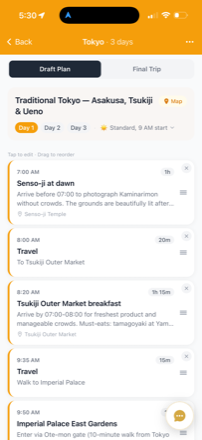
Get this guide as a tappable itinerary — freeDay-by-day plan, audio tours, one-tap Google Maps
Plan My Trip42 restaurants, every one walked into
Powered by ITINE
Day-by-day plan, audio tours, and one-tap Google Maps — completely free.
Destinations
Your Itinerary
Google Maps
These are the 42 spots we actually ate at across seven days in Tokyo. No PR invites, no sponsored meals, no “best of” lists copied from other blogs. Every restaurant here was paid for out of pocket and visited in person. The price ranges reflect what we actually spent, and the must-order items are what we’d get again without hesitation.
Pork modan-yaki — you grill it yourself on the table
Thick-cut toast with butter — Pelican Bakery has baked bread here since 1942; the cafe opened in 2017
Standard gyukatsu set — you sear remaining slices on the hot stone yourself
Tendon (tempura rice bowl) with the sesame oil-fried shrimp
Level 7 matcha gelato — the world’s most intense matcha ice cream
Zaru soba (cold buckwheat noodles) — simple, perfect, centuries-old recipe
Yuzu shio ramen — lighter citrus broth that’s a perfect counter to heavy tonkotsu
Pan-fried gyoza (6 pieces) with a beer — the crispy bottom is unreal
Macadamia nut pancakes with the mountain of whipped cream
Seafood mix okonomiyaki — cook it on the teppan at your table
Whatever the seasonal fruit vendor is slicing — Japanese strawberries in winter are transcendent
Pour-over coffee in the morning, cocktails at night — same space, different vibe
Sake (salmon) and mentaiko (spicy cod roe) — hand-formed right in front of you
Classic tonkotsu with extra chashu — customize your noodle firmness and broth richness
Order via tablet, sushi arrives on a high-speed conveyor — ¥110–¥180 per plate
Pick any bar, order yakitori and highballs — every spot has its own character
Tsukemen with thick noodles — the fish-pork broth is so concentrated it coats every strand
Lunch tempura set — the shrimp and sweet potato are fried in front of you at the counter
Lunch iwashi (sardine) set — Michelin-starred dinner quality at a fraction of the price
Draft beer and a hot dog — standing only, beloved by Shinjuku salarymen
Uni (sea urchin) and otoro (fatty tuna) — conveyor belt quality at standing bar prices
Whisky highball and whatever snack the bartender suggests — each bar seats 6–10 people
Standard gyukatsu set with wasabi and soy sauce — sear the rare beef on the hot stone
Dashimaki tamago on a stick — sweet, fluffy, and gone in three bites
A5 Wagyu sirloin lunch course — the lunch set is half the dinner price for the same beef
Hand-drip coffee and the thick-cut toast set — peak Showa-era vibes
Tori paitan (chicken white broth) soba — creamy, rich, and unlike any ramen you’ve had
Grilled scallops, fresh uni on rice crackers, and melon on a stick
Omakase set at the counter — the tuna is sourced from Toyosu Market’s best vendors
Seasonal bento box — inside Ueno Park with garden views through floor-to-ceiling windows
Chocolate-covered strawberries, fried chicken stalls, and the ¥500 fresh fruit cups
Seiro soba (cold soba on a bamboo tray) — this shop has been serving since 1880
Chicken katsu curry, spice level 3, 300g rice — customize everything from the menu sheet
Mori soba — no-frills buckwheat noodles served since 1884, perfect quick lunch
Egg sandwich and a drip coffee — the building dates to 1938 and the vibe is immaculate
Menchi katsu (fried meat croquette) from any of the stalls — hot, crispy, ¥200 perfection
Local craft beer flight and the karaage (fried chicken)
Weekly lunch plate — changes every week, always seasonal, in a converted apartment building turned art space
Ten-zaru soba — cold soba with tempura, eaten in a garden setting near the Great Buddha
Rokurinsha tsukemen — the anchor tenant and consistently the longest line for a reason
Kurobuta (black pork) hire katsu set — grind your own sesame, pour your own sauce
Shoyu soba with truffle oil — the world’s first Michelin-starred ramen shop
You can eat extraordinarily well in Tokyo without spending more than ¥1,000 per meal. That’s about $6.50 USD. In what other world capital can you get a Michelin-quality lunch for the price of a New York coffee? The trick is knowing what to look for.
7-Eleven, Lawson, and FamilyMart are not gas station food. Onigiri (¥120–¥200), bento boxes (¥400–¥600), egg sandwiches (¥250), and seasonal sweets. Lawson’s karaage-kun fried chicken is legendary.
Yoshinoya, Matsuya, and Sukiya serve beef bowls 24/7. Matsuya includes miso soup free. Order nami (regular) or tokumori (extra large) for ¥100 more. Perfect 3 AM fuel.
Found in every train station. Slurp a bowl of hot soba with tempura in under 5 minutes. No seats, no frills, no regrets. Look for the noren curtain near ticket gates.
CoCo Ichibanya is everywhere and fully customizable. Pick your protein, spice level (1–10), and rice amount. Level 3 is already plenty hot for most people.
Marugame Seimen lets you watch noodles being made. Grab a tray, pick tempura toppings cafeteria-style, and get fresh udon for under ¥500. The kabocha tempura is a must.
Many sit-down restaurants offer lunch sets (teishoku) that include a main, rice, miso soup, and pickles. The same restaurant might charge ¥3,000+ at dinner. Always check the lunch menu first.
Basement food halls in Isetan, Takashimaya, and Mitsukoshi sell bento, sushi, wagashi (sweets), and prepared foods. Best deals appear 30 min before closing when stickers go on.
Hand-formed rice balls from specialty shops blow away konbini versions. Salmon, tuna mayo, umeboshi (pickled plum). Three onigiri and a tea from the vending machine = ¥500 lunch.
Ramen in Tokyo is not one thing. It’s a universe. The four main styles you’ll encounter are:
Shoyu (soy sauce): Clear brown broth, the classic Tokyo style. Light, savory, and the baseline against which all other ramen is judged. Thin noodles.
Shio (salt): The most delicate style. Pale, clear broth that lets the quality of the soup base shine. Afuri’s yuzu shio is the gold standard.
Miso: Originated in Sapporo but found everywhere. Thicker, heartier, almost stew-like. Pairs with butter and corn. Winter comfort food.
Tonkotsu: Pork bone broth simmered for 12–24 hours until white and creamy. Rich, heavy, and the style most foreigners associate with ramen. Ichiran is the famous (if touristy) example.
Then there’s tsukemen (dipping ramen), where cold noodles are dipped into a concentrated broth. Fuunji in Shinjuku is the one to beat.
| Shop | Style | Area | Price | Why Go |
|---|---|---|---|---|
| Fuunji | Tsukemen | Shinjuku | ¥900 | Best dipping ramen in Tokyo. Fish-pork broth that clings to thick noodles. |
| Afuri | Yuzu Shio | Harajuku | ¥1,000 | Light citrus broth. Perfect if heavy ramen isn’t your thing. |
| Ichiran | Tonkotsu | Shibuya | ¥980 | Solo booth experience. Customize everything. Tourist-friendly. |
| Ginza Kagari | Tori Paitan | Ginza | ¥1,000 | Chicken white broth so creamy it’s almost a sauce. Unique. |
| Rokurinsha | Tsukemen | Tokyo Station | ¥1,100 | The tsukemen that started the craze. Thick noodles, intense broth. |
| Tsuta | Shoyu / Truffle | Yoyogi-Uehara | ¥1,200 | World’s first Michelin-starred ramen. Truffle oil elevates the shoyu base. |
Tokyo’s sushi spectrum is absurd. You can pay ¥110 per plate at a conveyor belt joint and still eat better than most sushi outside Japan, or you can drop ¥58,000 on an omakase where the chef has been perfecting his rice for 40 years. Both are valid experiences.
The key difference is the rice. At the high end, sushi chefs spend years mastering the vinegar, temperature, and pressure of every grain. At the low end, a machine forms it. The fish quality in Tokyo is universally high because of the supply chain — even “cheap” sushi here uses fish that would be premium elsewhere.
Don’t skip the tamago (egg). It’s the dish that reveals a chef’s skill most clearly.
| Experience | Price Range | Example | What to Expect |
|---|---|---|---|
| Conveyor Belt | ¥110–¥180/plate | Uobei (Shibuya) | Order by tablet, sushi arrives by high-speed lane. Fun, fast, cheap. |
| Standing Sushi | ¥1,500–¥3,000 | Numazuko (Shinjuku) | Fresh nigiri at a standing counter. No pretense, great value. |
| Market Sushi | ¥3,000–¥5,000 | Daiwa Sushi (Toyosu) | Counter seats, morning-fresh fish. Moved to Toyosu Market in 2018. |
| Mid-Range Omakase | ¥5,000–¥15,000 | Sushi Dai (Toyosu) | Chef’s choice, 10–12 pieces plus extras. Book ahead. |
| High-End Omakase | ¥20,000–¥58,000+ | Sukiyabashi Jiro (Ginza) | The pinnacle. 20 pieces in 30 minutes. Reservations months out via concierge. |
Tokyo isn’t a street food city the way Bangkok or Mexico City is. You won’t find vendors on every corner. But the places that do exist are concentrated, curated, and absolutely worth seeking out.
The undisputed king. Grilled scallops (¥300), tamago on a stick (¥100), fresh uni (¥500), melon on a stick (¥400), and strawberry daifuku (¥300). Go before 10:00 for full selection. Most stalls close by 14:00.
Covered market under the JR tracks. Fried chicken, chocolate-covered strawberries, dried fruit vendors shouting prices. More chaotic, more fun. Also great for cheap dried goods and spices to bring home.
Feels like old Tokyo. Menchi katsu (fried croquettes) for ¥200, cat-tail donuts from a bakery shaped like a cat, and soft-serve at every other shop. Best in the late afternoon golden hour.
Cotton candy the size of your torso, rainbow crepes, and novelty snacks for the gram. Not authentic, but the spectacle is part of the experience. Buy the crepe, skip the rainbow cheese toast.
The path to Senso-ji temple is lined with stalls selling ningyo-yaki (custard-filled cakes), senbei (rice crackers grilled fresh), and melon pan. Tourist prices, but the fresh senbei with soy glaze is legit.
| Restaurant | Cuisine | Price | Why It’s Worth It | How to Book |
|---|---|---|---|---|
| Ginza Steak Aoki | Teppanyaki A5 Wagyu | ¥8,000–¥15,000 | Lunch course is half the dinner price for the same quality beef. Counter seats let you watch the chef. | Tabelog or phone 2–3 days ahead |
| Sushi Dai (Toyosu) | Omakase Sushi | ¥5,000–¥6,600 | The omakase that made Toyosu famous. Seasonal fish, perfect rice, intimate counter. | Queue at 5:00 AM or book via hotel concierge |
| Nakajima (Dinner) | Kaiseki | ¥8,000–¥15,000 | Sardine kaiseki from a Michelin-starred kitchen. The gap between lunch (¥1,100) and dinner price shows the range. | Tabelog reservation. Book 1 week ahead. |
| Tempura Kondo | Tempura | ¥12,000–¥20,000 | Sweet potato tempura that changed what I thought tempura could be. Vegetables elevated to art. | Book via concierge. 2–4 weeks ahead. |
| Sukiyabashi Jiro (Ginza) | Omakase Sushi | ¥58,000+ | The Jiro Dreams of Sushi experience. 20 pieces in 30 minutes. A once-in-a-lifetime meal. | Hotel concierge only. 1–3 months ahead. |
Splurging in Tokyo is different from splurging in Paris or New York. There’s no velvet rope energy. The most expensive sushi counter in Ginza might be a 6-seat room in a basement with no sign. The value is in the craft, the ingredients, and the decades of mastery — not the décor.
One tip: many high-end restaurants offer dramatically cheaper lunch sets. Nakajima’s ¥1,100 lunch is from the same Michelin-starred kitchen that charges ¥8,000+ at dinner. Always check if your splurge restaurant has a lunch option first.
Japanese food culture has rules. Not rigid, scary rules — more like a rhythm you can feel once you pay attention. Nobody expects tourists to be perfect, but making an effort goes a very long way.
Tipping is not a thing in Japan. It can actually be confusing or even slightly insulting. The price on the menu is the price. Service is built into the culture, not bought.
Slurping ramen, soba, and udon is expected. It aerates the noodles, cools them down, and signals you’re enjoying the meal. Silence at a ramen counter is the awkward thing.
Before eating, say “itadakimasu” (ee-tah-dah-kee-mas). It means “I humbly receive.” Hands together, slight bow. It’s the Japanese grace.
When you’re done, say “gochisousama deshita” (go-chee-so-sa-ma desh-ta). It means “Thank you for the meal.” Say it to the chef, the server, or just quietly to yourself.
When drinking sake or beer with others, pour for your companions and let them pour for you. Pouring your own drink is a subtle faux pas. Hold the bottle with both hands when pouring.
Never stick chopsticks upright in rice (it resembles funeral incense). Never pass food chopstick-to-chopstick (funeral ritual). Rest them on the hashioki (chopstick rest) when not eating.
Many small restaurants, ramen shops, and izakayas are cash only. ¥10,000 notes are hard to break at small places. Keep a supply of ¥1,000 notes and coins. 7-Eleven ATMs accept foreign cards.