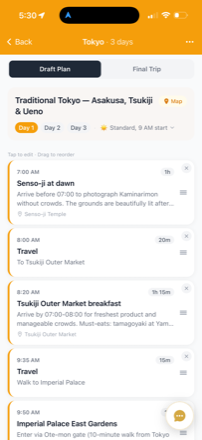
Get this guide as a tappable itinerary — freeDay-by-day plan, audio tours, one-tap Google Maps
Plan My TripMonth by month — weather, crowds, events, costs
Powered by ITINE
Day-by-day plan, audio tours, and one-tap Google Maps — completely free.
Destinations
Your Itinerary
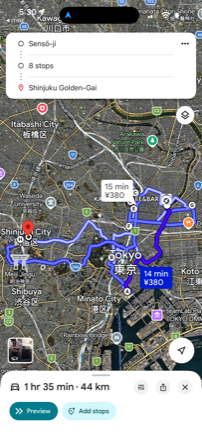
Google Maps
| MONTH | WEATHER | CROWDS | COST | RATING |
|---|---|---|---|---|
| January | Cold (2–10°C), dry, clear | Low | Cheapest | ★★★☆ — crisp and uncrowded |
| February | Cold (3–11°C), dry | Low | Cheap | ★★★☆ — plum blossoms start |
| March | Mild (6–14°C), some rain | Rising | Moderate | ★★★★★ — cherry blossoms start late March |
| April | Warm (10–19°C), some rain | Peak | High | ★★★★★ — full cherry blossom, best month |
| May | Warm (15–24°C), pleasant | Moderate | Moderate | ★★★★ — beautiful weather, blossoms done |
| June | Warm (19–26°C), rainy season | Lower | Moderate | ★★☆ — tsuyu (rainy season), humid |
| July | Hot (23–30°C), humid | Moderate | Moderate | ★★★ — festivals begin, very hot |
| August | Very hot (24–32°C), humid | Moderate | Moderate | ★★☆ — oppressive heat, Obon holiday |
| September | Warm (20–28°C), typhoon risk | Lower | Moderate | ★★★ — heat fading, typhoon season |
| October | Mild (14–22°C), pleasant | Rising | Moderate | ★★★★ — great weather, autumn starts |
| November | Cool (9–17°C), clear | Peak | High | ★★★★★ — peak autumn foliage |
| December | Cold (4–12°C), dry | Moderate | Moderate | ★★★★ — illuminations, year-end energy |
This is why 50% of first-time visitors come to Japan. The cherry blossoms (sakura) usually peak in Tokyo in the last week of March through the first week of April — but the exact dates shift each year. Check japan-guide.com/sakura for real-time forecasts starting in February.
If you miss peak bloom: don’t panic. The atmosphere in Tokyo during sakura season is magical even when the trees are 70% bloomed or starting to fall. The falling petals (hanafubuki) are arguably more beautiful than full bloom.
The most beautiful setting. Multiple cherry varieties mean a longer bloom window. ¥500. Closed Mondays. No alcohol allowed.
The classic hanami (picnic under blossoms) spot. Free. Gets extremely crowded on weekends — arrive early to claim space.
Rowboats under cherry blossom tunnels. One of Tokyo’s most iconic sakura photos. Rent boats on the spot.
800 trees line both banks, illuminated at night. Nakameguro area. The evening walk is unforgettable.
Quieter alternative with swan boats under blossoms. Day 7 itinerary area. Less crowded than Ueno.
June is tsuyu (rainy season) — expect 12–14 days of rain. July and August are genuinely brutal: 30–35°C with oppressive humidity. You will sweat through your clothes. But summer has its own magic.
The biggest fireworks festival in Tokyo draws 1 million+ people. Spectacular displays over the river near Asakusa. Get there hours early for a good spot.
Traditional summer dance festivals at temples and shrines across the city. Wear a yukata (summer kimono) from a rental shop to blend in.
Most tourists avoid the heat, so major attractions are noticeably less crowded. teamLab with fewer people is a different experience.
Kakigori (shaved ice with syrup), cold soba, rooftop beer gardens, cold matcha — Tokyo adapts deliciously to the heat.
If you can’t make cherry blossom season, autumn is equally stunning and significantly less crowded. November is peak foliage — the maple trees turn red and gold across the city. October has perfect weather (15–22°C) for walking. This is arguably the best time to do the full 7-day itinerary.
The famous ginkgo avenue. Golden tunnel of yellow leaves. Free. Late November peak. One of Tokyo’s most photographed autumn spots.
Evening illumination of autumn maples reflected in the pond. Stunning. ¥300. One of Tokyo’s finest traditional gardens.
Great variety of maples and ginkgo trees. ¥500. Less crowded than Meiji Jingu Gaien with equal beauty.
One of Tokyo’s oldest gardens. ¥300. Full-moon bridge over a pond surrounded by fiery maples. Quiet on weekdays.
Tokyo winters are cold (2–12°C) but dry and clear — perfect visibility for Shibuya Sky and Mt. Fuji views. December has extraordinary illumination displays across the city. January–February are the cheapest months to fly and stay.
Omotesando, Tokyo Midtown, Roppongi Hills, Caretta Shiodome. Free. November–February. The city transforms into a light show.
Hatsumode (first shrine visit of the year). Meiji Jingu gets 3 million visitors. Intense but unforgettable. Senso-ji is equally atmospheric.
The Imperial Palace inner grounds open to the public (normally closed). A rare chance to see inside.
January–February (excluding New Year week) offers the lowest flight and hotel prices of the year. Up to 40% savings vs cherry blossom season.
| MONTH | EVENT | WHAT IS IT |
|---|---|---|
| Jan 1–3 | Hatsumode | New Year shrine visits. Meiji Jingu, Senso-ji packed with millions. |
| Late Feb | Plum Blossom (ume) | Early blooms at Yushima Tenjin, Koishikawa Korakuen. Quieter than sakura. |
| Late Mar–early Apr | Cherry Blossom (sakura) | Peak bloom. Hanami picnics everywhere. Tokyo’s main event. |
| Mid Apr | Meiji Jingu Spring Festival | Traditional performing arts at the shrine. Free to watch. |
| Mid-May weekend (closest to May 15) | Kanda Matsuri (odd years) | One of Tokyo’s three great festivals. Portable shrines through Kanda. |
| Mid Jun | Sanno Matsuri (even years) | Grand procession through central Tokyo. Massive portable shrine parade. |
| Late Jul | Sumida River Fireworks | Biggest fireworks festival. 1 million+ attendance. Near Asakusa. |
| Aug 13–16 | Obon | Ancestor festival. Some businesses close. Bon Odori dances at temples. |
| November | Shichi-Go-San | Children’s festival. Kids in kimono at shrines. Adorable photo ops. |
| Nov–Feb | Winter Illuminations | Light displays across the city. Omotesando, Roppongi, Midtown. |
| Dec 31 | New Year’s Eve | Midnight temple bells (joya no kane). 108 bells rung to purify. |